Overwatch · Indoor
Overwatch: every camera in a building, one 3D picture
Overwatch is Fourth Echelon's indoor product: it is designed to turn the fixed cameras a building already has into one 3D picture of the site, measured in metres, and to run offline on site.
- Status
- Overwatch is a prototype interface on simulated data, with the real camera pipeline in progress.
- Last updated
The problem
Many camera tiles. No single picture.
A building with thirty cameras gives its control room thirty separate tiles. The operator has to stitch them together by eye: which door is that, which corridor does this one look down, is the person on screen four the same person who just left screen nine.
When something happens, the question is always the same. Who was there, where did they go, and when. Today that means scrubbing through footage camera by camera.
Multi-camera fusion
From CCTV tiles to one 3D map of the building
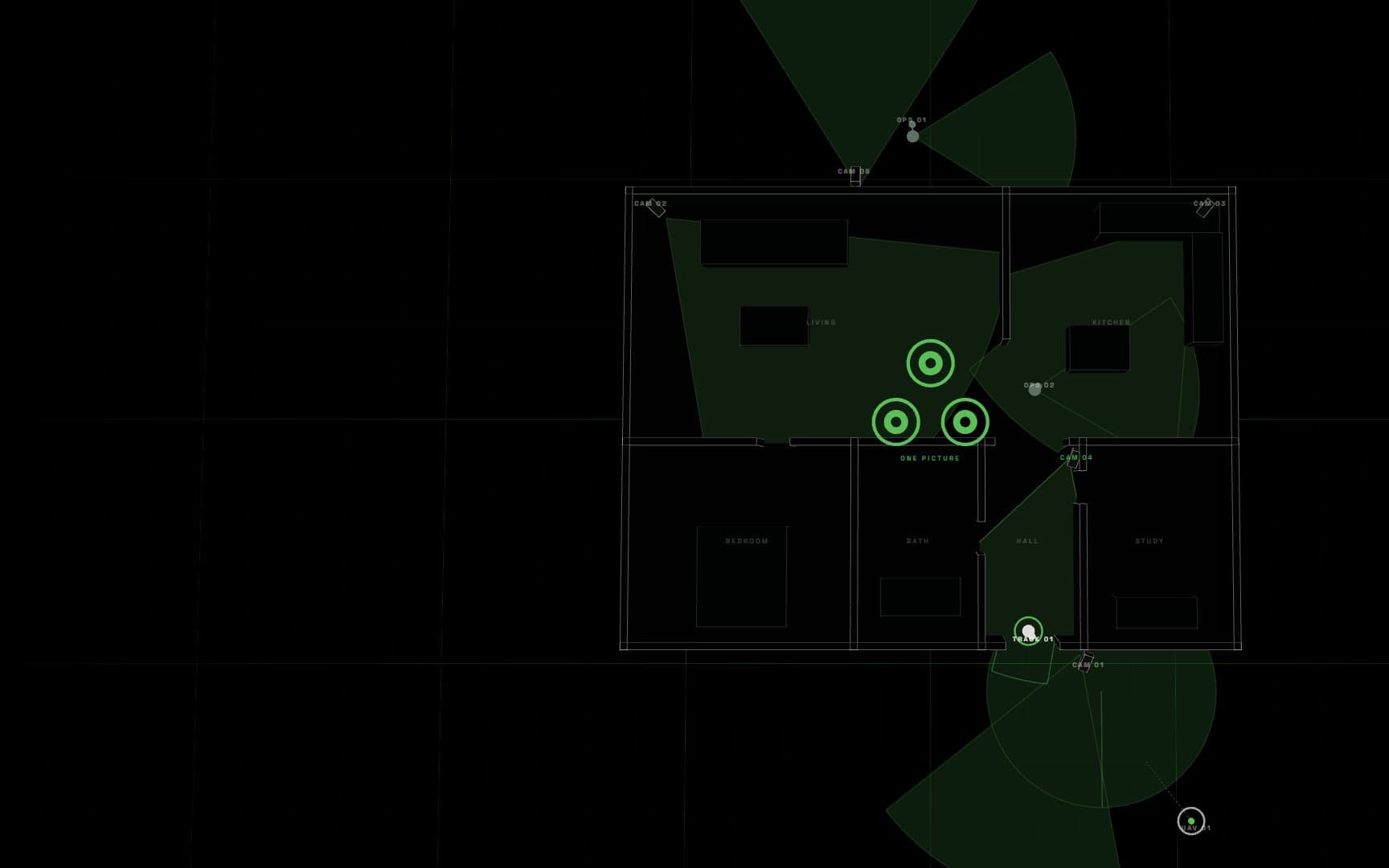
Overwatch is designed to build one 3D model of the building, in metres, and to place every fixed camera inside it. What each camera sees lands in the same model, so the site becomes one picture instead of a wall of screens.
In that design, people appear in the model as anonymous moving figures. A person seen by three cameras is one figure with one track through the building, counted once. Because everything shares one model, rules can be set in metres: a zone, a doorway, a distance from a fence. Every alert is meant to come with a position someone can act on.
Every event is kept in an append-only record, so the picture is designed to be wound back: drag the timeline to 2:14 am and see who went where.
Alerts
Alerts that trace back to their cause
The prototype interface already shows this on a simulated building. A bag left on its own is flagged, then traced back to the anonymous track that left it and the door that track came in by, shown as a replay.
The real camera pipeline that will feed the same interface is in progress. Until it has run on a real site, we describe this as a prototype and nothing more.
Questions
Ask in English, Hinglish or Hindi
Operators ask questions the way they speak. Overwatch is being built and tested for all three:
- Who went into the server room last night?
- Raat ko server room mein kaun gaya tha?
- रात को सर्वर रूम में कौन गया था?
Questions are designed to become read-only queries over the site's own records, so every answer can point back to the data it came from. Spatial questions, such as the walking route between two rooms or what a camera can see, go through OpenSTP, the Spatio-Temporal Protocol.
On site
Offline video analytics, on one computer on the premises
Many sites cannot send their footage to someone else's cloud, and should not have to. Overwatch is designed to run entirely on one computer on the premises, with no internet connection and no cloud services. The footage, the model and the records stay in the building.
Restraint
What Overwatch does not do
No facial recognition. Overwatch is designed to track people as anonymous positions. It should know that someone walked from the lobby to the stairwell, never who they are.
Private rooms stay unobserved. Overwatch is designed so that rooms a site marks private are never observed, stored or searchable. The prototype's Restraint mode shows them hatched and labelled “Unobserved”.
No claims ahead of the work. Simulated work is labelled simulated. The model on our home page is an illustration, not a live feed.
Evidence
Where to see the work so far
On the WILDTRACK public benchmark (EPFL, seven calibrated cameras), our fusion of several cameras onto one ground map scores MODA 83.6 and IDF1 87.3 on the test split, with a mean ground position error of 0.118 m. Nothing was trained on WILDTRACK: the person detector is off the shelf, trained on public data (COCO), and one frozen configuration was scored once. Systems trained on the dataset score about 88 to 92 MODA, so this is an untrained baseline, not a state-of-the-art claim. No WILDTRACK frames of people appear on this site, only our scores.
The Playground shows rooms rebuilt in 3D from short stock video clips, with frame counts and build times. Everything there is licensed stock footage and labelled so.
Pilots
Looking for first pilot sites
No paid pilot has run yet. We are looking for the first sites to try Overwatch on their own cameras: campuses, offices, warehouses and other buildings with many cameras and one control room. Write to ops@fourthechelon.in.
Questions
Questions about Overwatch
What is Overwatch?
Overwatch is Fourth Echelon's indoor product: it is designed to turn the fixed cameras a building already has into one 3D picture of the site, measured in metres, and to run offline on site.
Is Overwatch available?
Not yet. Overwatch is a prototype interface on simulated data, with the real camera pipeline in progress. We are looking for first pilot sites.
Does Overwatch use facial recognition?
No. Overwatch is designed to track people as anonymous positions in metres, never to identify who they are. Facial recognition is not part of the product.
Does Overwatch need the internet or a cloud service?
No. It is designed to run offline on one computer on the premises, with no footage sent to a cloud service.
Which languages can I ask Overwatch questions in?
Overwatch is being built and tested for questions in English, Hinglish and Hindi, the way operators actually ask.
Does Overwatch need new cameras?
It is designed to start from the fixed cameras a building already has. The 3D picture is also designed to show the ground no camera covers, so a site can see where its coverage has gaps.